
What Should a Privacy-First Social Network Actually Promise?
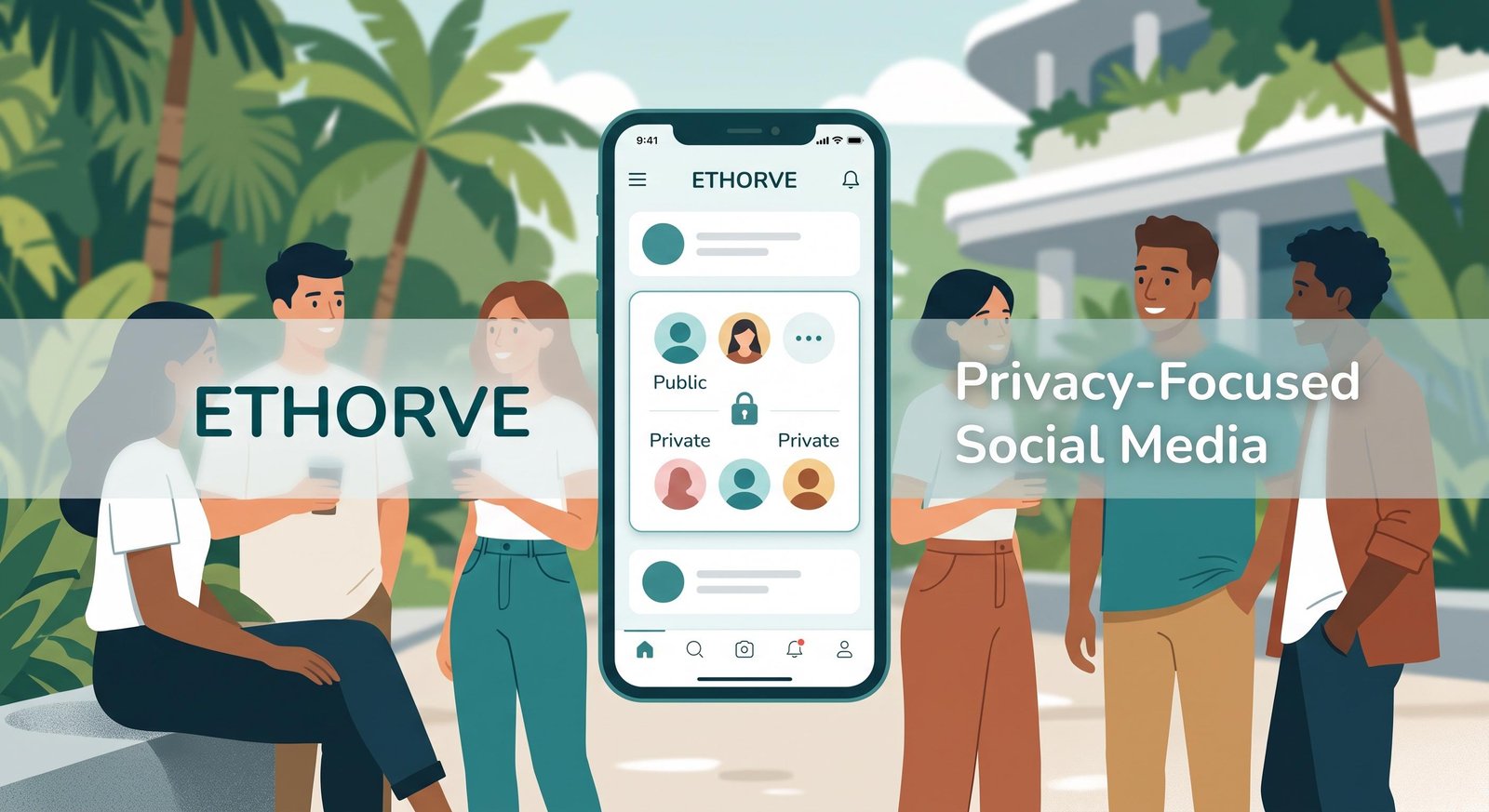
Privacy-Focused Social Media Platform. Real People. Real Connections.
Privacy has become an increasingly important part of how we use the internet.
Every day, we share photos, conversations, opinions, interests and parts of our personal lives online. Social media has made it easier than ever to stay connected, but it has also raised an important question:
How much of our personal information should a social platform actually need?
A privacy-first social network should not simply tell people that their data is “safe.” It should be clear about what it collects, why it collects it, how it uses it, how long it keeps it and what happens when you decide to leave.
That is where meaningful privacy begins.
What Data Does a Social Platform Actually Need?
A social platform needs some information to function.
For example, when you create an account, it may need:
- Your name or chosen display name
- An email address or other account identifier
- Login credentials
- Information needed to maintain your account
- Content that you choose to upload or share
- Basic technical information required to operate and secure the service
Some information may also be needed to prevent abuse, protect accounts, troubleshoot problems and keep the platform functioning properly.
The important question is not whether a platform collects any data.
The better question is:
Does it collect only what it reasonably needs to provide the service?
A privacy-focused approach should aim for data minimisation, collecting and retaining information for legitimate purposes rather than collecting everything simply because it might be useful someday.
What Data Should a Social Platform Not Need?
This is where things become more interesting.
A social platform should carefully consider whether it really needs extensive information about your behaviour outside the service.
For example, does it need to know:
- Which websites you visit?
- What you search for elsewhere?
- Which products you are considering buying?
- Your browsing habits across different websites?
- Your location at all times?
- Your interests inferred from your behaviour?
- Which advertisements you looked at on another platform?
There may be legitimate situations where certain information is required for a specific feature or security purpose.
But “we can collect it” is not the same as “we need it.”
A privacy-first philosophy starts with a simpler question:
If we don't need the data to provide the service, why collect it?
Advertising and Behavioural Tracking
Advertising itself isn't necessarily incompatible with privacy.
Businesses need ways to reach customers, and advertising can help fund online services.
The bigger issue is how advertising is delivered.
There is a significant difference between showing an advertisement based on the page someone is viewing and building an extensive behavioural profile based on everything that person does online.
Behavioural tracking can involve collecting information about what people click, view, search for and interact with, then using that information to infer their interests and predict what they might do next.
Over time, this can create surprisingly detailed profiles.
A privacy-focused social network should be transparent about whether it uses:
- Behavioural advertising
- Cross-site tracking
- Third-party advertising trackers
- Personalised advertising
- User profiling
- Data sharing with advertising partners
Users should not have to become technology experts to understand what is happening to their information.
What Happens When You Delete Your Account?
Account deletion is one of the simplest questions a social network should be able to answer.
What happens to my information when I leave?
A transparent platform should explain:
- How users can request account deletion
- What information is deleted
- What information may need to be retained
- How long retained information is kept
- What happens to posts, photos and comments
- Whether backups may temporarily contain information
- Whether information is shared with third parties
Deletion may not always mean that every piece of information disappears instantly from every system. Some information may need to be retained for legal, security or legitimate operational reasons.
That's precisely why the policy should explain the process clearly.
Leaving a platform shouldn't feel like leaving a mystery behind.
Private and Public Content Are Not the Same
One of the most important distinctions on any social network is whether something is private or public.
A photo shared with a small group of friends is fundamentally different from a post intended for everyone on the internet.
A privacy-conscious platform should make it clear:
Who can see what I share?
Users should understand the available visibility settings before they publish something.
Depending on the platform, this could include:
- Private content
- Friends or connections
- Groups
- Specific audiences
- Public posts
- Profile information
Privacy isn't simply about hiding everything.
It is about giving people meaningful control over who gets to see what they choose to share.
Privacy Is a Responsibility, Not a Marketing Word
Being privacy-focused doesn't mean claiming that a platform is completely private or that no information is ever collected.
A social network still needs to operate. It needs to authenticate users, prevent abuse, protect accounts, deliver content and maintain its infrastructure.
The difference is in the approach.
A privacy-first or privacy-focused social network should ask:
What information do we actually need?
rather than:
What information can we collect?
That difference in mindset can have a significant impact on how a platform is designed.
Why ETHORVE?
ETHORVE was created around a simple idea:
Social media should be about people and connections, not simply about collecting more data.
ETHORVE is a Singapore-based, privacy-focused social media platform designed to provide a space where people can share, connect and participate in communities while keeping privacy and responsible data practices in mind.
ETHORVE is still in beta and is currently invitation-only.
That means we are still learning, testing and improving the platform.
We don't claim to have everything figured out.
Instead, we want to build ETHORVE transparently and continue listening to the people who use it.
Come and Test ETHORVE
If you believe social media can be built around people, meaningful connections and greater respect for privacy, we'd love for you to experience ETHORVE for yourself.
ETHORVE is currently available to beta users by invitation.
If you'd like to be part of the beta community, contact us with a short introduction and tell us why you would like to participate.
Try it. Explore it. Tell us what you think.
Because ultimately, a privacy-focused social network shouldn't just tell you what it believes in, it should give you the opportunity to see how it works.
ETHORVE
Privacy-Focused Social Media Platform.
Good People. Good Conversations. Great Memories.
Connect meaningfully. Share authentically. Stay in control.


 SG | English
 Arabic
 Spanish
 Portuguese
 Deutsch
 Turkish
 Dutch
Dutch
 Italiano
 Russian
 Romaian
 Portuguese (Brazil)
 Greek
Greek